

COMV Keynote Speakers 2026
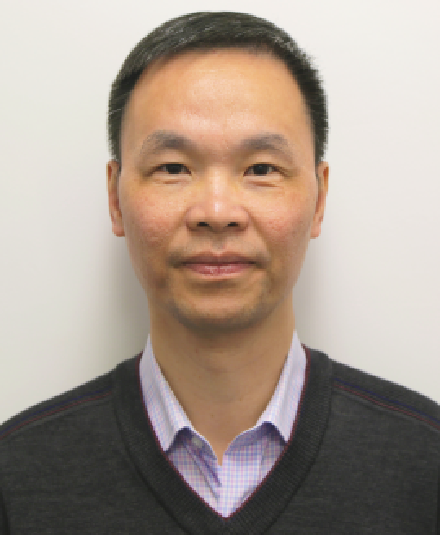
Huiyu Zhou
University of Leicester, UK
Dr. Huiyu Zhou received a Bachelor of Engineering degree in Radio
Technology from Huazhong University of Science and Technology of
China, and a Master of Science degree in Biomedical Engineering from
University of Dundee of United Kingdom, respectively. He was awarded
a Doctor of Philosophy degree in Computer Vision from Heriot-Watt
University, Edinburgh, United Kingdom. Dr. Zhou currently is a full
Professor at School of Computing and Mathematical Sciences,
University of Leicester, United Kingdom. He has published over 600
peer-reviewed papers in the field. His research work has been or is
being supported by UK EPSRC, ESRC, AHRC, MRC, EU, Innovate UK, Royal
Society, British Heart Foundation, Leverhulme Trust, Puffin Trust,
Alzheimer’s Research UK, Invest NI and industry.
Speech Title: TBA...
Abstract: TBA...
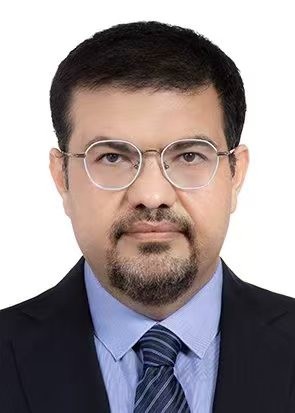
Ata Jahangir Moshayedi
Ata Jahangir Moshayedi
DGUT-CNAM Institute, Dongguan University of Technology, China, IEEE
Senior Member, ACM Member
Dr. Ata Jahangir Moshayedi is an Associate Professor at DGUT-CNAM
Institute of Dongguan University of Technology, China. He holds a
Ph.D. in Electronic Science from Savitribai Phule Pune University
(formerly the University of Pune), India. He is a Senior Member of
IEEE, a Professional Member of ACM, and a Life Member of the
Instrument Society of India.Dr. Moshayedi has published over 100
research papers, authored 4 books, contributed to 4 book chapters,
and holds 2 patents and 16 copyrights. He actively serves as a
technical program committee member and session chair for numerous
international conferences.
His current research focuses on robotics, particularly the
development of autonomous guided vehicles (AGVs) for applications
such as smart farming, food delivery and elderly care.
Speech Title: From Pipe Defects to Intelligent Robots
AI-driven pipeline inspection From theory to real-world
deployment
Abstract: Pipeline systems are essential components of modern
industrial infrastructure, enabling the transportation of oil, gas,
and water across large-scale networks. However, these systems are
highly susceptible to various structural and operational defects,
including cracks, corrosion, leakage, and deformation, which can
result in significant environmental damage, safety hazards, and
economic losses. This keynote presents an integrated research
progression that spans from pipeline defect characterization to the
development of intelligent inspection and autonomous robotic
systems.
The presentation begins with a comprehensive analysis of pipeline
defect types, their underlying causes, and the key challenges
associated with inspection in real-world environments. This analysis
highlights the limitations of conventional manual and sensor-based
inspection techniques, particularly in complex, hazardous, and
inaccessible conditions. To overcome these challenges, a deep
learning-based defect detection framework is introduced using the
YOLO model, enhanced with attention mechanisms to improve feature
representation and achieve high-accuracy real-time multi-class
defect detection.
Furthermore, a mobile-based system, the Handy Pipe Defect Recognizer
(HPD), is developed to provide portable and real-time defect
classification for field applications. In addition, a pipe
inspection robot is proposed, specifically designed for operation in
confined and hazardous pipeline environments, integrating
vision-based perception with adaptive mobility. Finally, the keynote
unifies these contributions into a comprehensive smart
infrastructure framework that combines artificial intelligence,
mobile computing, and robotics, enabling autonomous, efficient, and
scalable pipeline monitoring for next-generation industrial systems.

Azhar Imran Mudassir
Beijing University of Technology, China, IEEE Senior Member
Dr. Azhar Imran is an Associate Professor at the Department of
Computer Science, Beijing University of Technology, China, with over
13 years of international research and academic experience. He
specializes in Artificial Intelligence, Machine Learning, Data
Science, and Image Processing, with research interests spanning
intelligent systems, computational intelligence, computer vision,
pattern recognition, and data-driven modeling. His work focuses on
developing robust, scalable, and interpretable AI solutions
applicable across diverse domains. He has published more than 100
research articles in high-impact journals, including IEEE
Transactions on Neural Networks and Learning Systems, IEEE
Transactions on Image Processing, and Pattern Recognition,
accumulating over 4000 citations. He has been invited as a keynote
speaker at prominent international conferences, including ICBDDM-24,
ICCTEC-25, CCET-25, CVIT-24, ICDSP-24, and CVIT-23, highlighting his
global recognition in AI and machine vision. As a Senior Member of
IEEE, he serves on the editorial boards of multiple high-impact
journals, including IEEE Access, MDPI Cancers, Applied Sciences,
Springer Visual Computer, Taylor & Francis Biomedical Imaging &
Visualization, and Multimedia Tools & Applications, and has acted as
a guest editor for IEEE Transactions on Industrial Informatics and
IEEE Sensors Journal. His contributions have been recognized with
several prestigious awards, including the Young Marconi Award, Prime
Minister's Science and Technology Award, the Embassy Honored Award
from the Pakistan Embassy in Beijing, and the Outstanding Researcher
and Excellence in Teaching Awards from Beijing University of
Technology. He is also recognized as a ScholarGPS top 1% scientist
worldwide. Through his interdisciplinary research, Dr. Imran
continues to advance intelligent, interpretable, and socially
impactful AI systems, shaping the next generation of computational
and vision technologies.
Speech Title:Hybrid Deep Learning and Computational Optics
for Explainable Medical and Machine Vision Systems
Abstract:
The convergence of computational optics and machine vision is
enabling a paradigm shift in intelligent imaging systems. In this
keynote, I present our research contributions on hybrid deep
learning frameworks that integrate image formation principles with
data-driven representation learning to achieve robust, scalable, and
interpretable visual understanding. Our work focuses on medical
image analysis and ECG image-based multi-class diagnosis, where
EfficientNet-based and convolutional architectures are
systematically designed to handle complex classification tasks under
real-world constraints. Key publications informing this keynote
include “Automated Multi-Class ECG Diagnosis from Image
Representations Using EfficientNet and Grad-CAM” and other recent
work in medical image feature learning.
A distinguishing contribution of this research lies in embedding
explainability into deep models through attention mechanisms and
gradient-based visualization techniques, such as Grad-CAM, allowing
transparent and clinically meaningful interpretation of predictions.
To address challenges including noise, domain variability, and
limited annotated data, we incorporate computational imaging priors
alongside transfer learning and domain adaptation strategies,
significantly improving model generalization and stability.
Extensive experimental evaluations demonstrate that the proposed
hybrid frameworks consistently outperform conventional deep learning
approaches in terms of accuracy, robustness, and interpretability
across diverse datasets. Looking ahead, the keynote highlights
emerging directions, including multimodal learning,
transformer-based vision architectures, and explainable AI, aiming
to establish trustworthy next-generation machine vision systems.
These contributions underscore the critical role of unifying
computational imaging and machine learning to advance applications
in healthcare diagnostics, intelligent surveillance, and large-scale
visual analytics.
TBA......